
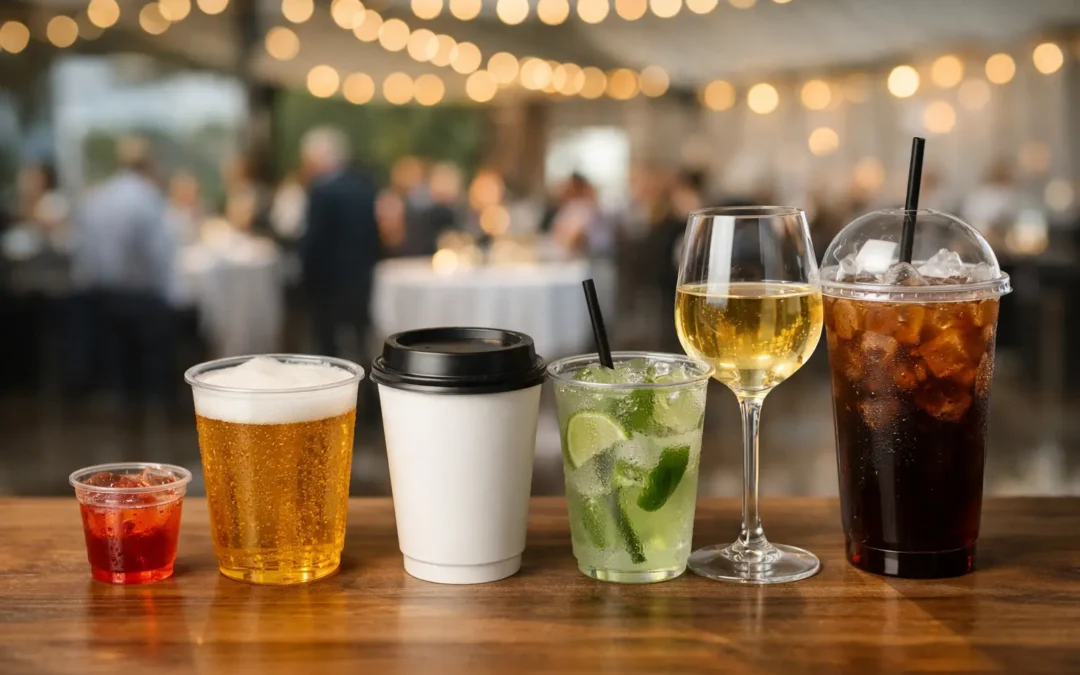
A cup that is too small creates extra trips to the bar. One that is too large can make a tasting pour look lost, increase beverage costs and feel awkward in a guest’s hand. When clients ask what cup sizes suit events, the best answer starts with the drinks being served, then considers the crowd, venue and service style.
For Australian events, cup size is not simply a capacity decision. It affects how quickly staff can serve, how your branding presents, how much stock you need on hand and whether guests get the experience you intended. The right personalised plastic drinkware should look the part while doing its job reliably from the first welcome drink to the final toast.
What cup sizes suit events of different types?
Most event drinkware choices sit within a practical range, but each size has a clear role. Rather than choosing the biggest cup available, match the vessel to the occasion and pour.
150-200 mL: tastings, samples and celebratory serves
Smaller cups are ideal where the drink itself is the feature, but the portion is deliberately measured. Think wine tastings, brewery samplers, food festivals, product launches, kids’ events and welcome shots. Flutes and petite tasting glasses also suit sparkling wine or a pre-dinner cocktail at weddings and formal functions.
Their biggest advantage is control. A smaller serve lets guests try several products without overfilling, and it helps event organisers manage beverage volume. It also encourages movement and conversation, particularly at activations where people are sampling rather than settling in for a full drink.
The trade-off is that these cups are not suitable for a long bar queue or an all-afternoon outdoor event. Guests drinking beer, soft drink or water will need frequent refills, so ensure the service setup can keep pace.
250-300 mL: flexible all-round event cups
A 250-300 mL cup is often the most versatile choice for functions with a mixed beverage menu. It works well for soft drinks, juice, water, standard mixed drinks and modest beer or wine pours. Community events, club functions, school fundraisers, staff celebrations and casual birthday parties often benefit from this manageable size.
This is also a sensible option when children and adults will both be attending. It is comfortable to hold, stores efficiently and supports a measured pour without looking undersized. For branded events, the more compact surface can make a strong logo feel clean and intentional rather than stretched across a large vessel.
If you are serving full-strength beer or generous cocktails as the main offering, however, this size may feel restrictive. It is best used where variety and easy handling matter more than a large single serve.
350-425 mL: the dependable choice for busy bars
For many corporate events, sporting clubs, hospitality venues and promotional activations, the 350-425 mL range is the practical middle ground. It suits beer, cider, soft drinks, water and spirit mixers, with enough room for ice where needed. It can also accommodate a reasonable wine pour without appearing overfilled.
This capacity is particularly useful for outdoor events, where guests may prefer fewer refills and staff need to keep queues moving. A larger format offers more visible space for custom printing too, making it well suited to sponsor logos, event names and campaign artwork.
There is a balance to strike. More capacity can mean greater product use per serve, especially if bar staff are free-pouring. If your budget depends on closely controlled beverage portions, decide whether the cup’s full capacity and the intended fill level are clearly understood by the service team.
500 mL and above: festivals, beer service and long sessions
Larger cups, steins and specialty beer glasses are made for occasions where the beverage is central to the experience. Beer festivals, brewery launches, race-day marquees, live music events and clubhouse service can all suit a 500 mL format. They are also effective merchandise pieces, as guests are more likely to keep a substantial, well-branded cup after the event.
A large cup is not automatically the best choice for every crowd. It needs more storage space, uses more liquid per serve and can be heavier when full. For a formal seated dinner, a 500 mL cup may look out of place beside table settings. For a hot summer festival, it may be exactly what guests want.
Match the cup shape to the drink, not just the volume
Capacity is only one part of the decision. A wine taster, flute, beer glass, mug, mason jar or tumbler can hold a similar amount while creating a very different impression.
Wine tasters and stemless wine-style cups support a more refined food-and-wine occasion. Flutes make sense for sparkling wine, engagement parties, weddings and award presentations where the toast is a moment in itself. Beer glasses and steins suit breweries, pubs, sporting clubs and events with a relaxed, social feel. Mason jars can add a casual, rustic look to a birthday, wedding reception or outdoor celebration, while straight-sided cups are highly practical for high-volume service and branded campaigns.
The shape also affects the usable print area. A wide, straight cup may suit bold campaign artwork, while a curved beer glass can complement a simple logo or event mark. Share your artwork early so the drinkware format and decoration method can be considered together, rather than treating branding as an afterthought.
Consider how guests will use the cup
A smart cup selection reflects the way people move through an event. At a seated dinner, guests can manage a smaller wine or water glass because the table service is close by. At a standing cocktail event, a cup that is easy to hold alongside a canapé is more useful than an oversized vessel. At a festival, durability and capacity usually take priority.
Outdoor conditions matter too. Warm weather increases demand for water, soft drinks and ice-filled mixers, which often points to a larger 350-425 mL cup. If your event has limited bar access, a bigger cup can reduce queues. If there are many beverage stations and short service lines, smaller measured pours may be more efficient.
For family events, consider who will be holding the drinkware. Smaller cups are easier for younger guests and help reduce spills. For corporate functions, a polished all-purpose cup can keep the bar presentation consistent even when guests choose different drinks.
Plan for fill levels and beverage costs
The capacity printed on a product specification is not necessarily the amount you should pour. A 425 mL cup may be used for a 330 mL beer with room for a head, or a mixed drink with ice. A 300 mL wine cup may receive a 150 mL serve. Planning the fill level protects your beverage budget and gives guests a consistent experience.
Before ordering, confirm what will be served in each cup and how many serves are expected per person. A simple drinks plan can reveal whether one versatile cup is enough or whether two sizes will make service easier. For example, a 200 mL tasting cup paired with a 425 mL event cup works well for a brewery activation, while flutes plus 300 mL water or soft drink cups may suit a wedding reception.
Also allow for water. At summer functions, hydration is a guest-comfort issue as much as a catering detail. Providing an appropriately sized cup for water can reduce the temptation for guests to reuse a small tasting vessel all day.
Make custom branding work at the chosen size
Your cup should carry more than a drink. It can reinforce a sponsor, commemorate a milestone, promote a venue or give guests a useful keepsake. Larger cups generally provide more room for prominent artwork, but a smaller cup can still make an impact with a crisp logo, strong colour selection and uncluttered design.
Avoid trying to fit every message onto one cup. Event name, date, logo and a short campaign line may be enough. For sponsor-heavy events, consider which brand needs primary visibility and how artwork will read when the cup is filled, held or photographed.
PlasticGlasses.net.au can assist with practical format and decoration advice, including digital proofs before production. That support is valuable when you are weighing up print placement, Pantone colour matching and a design that needs to look good across a full event run.
Order for the event you are actually running
It is tempting to select a cup based on what looks impressive in isolation. The better approach is to picture the service area at its busiest: guests arriving at once, staff pouring quickly, drinks being carried outdoors and branded cups appearing in photos. Choose a size that remains comfortable and functional in that real setting.
If the event has a varied menu, two complementary cup sizes are often more effective than asking one format to do everything. A small taster and a larger beer or mixer cup, or a flute alongside a general-purpose tumbler, can improve the guest experience without complicating service.
The right size is the one that makes pouring easy, keeps guests comfortable and gives your brand a place in the occasion. Start with the drink, then let the event tell you what the cup needs to do.