
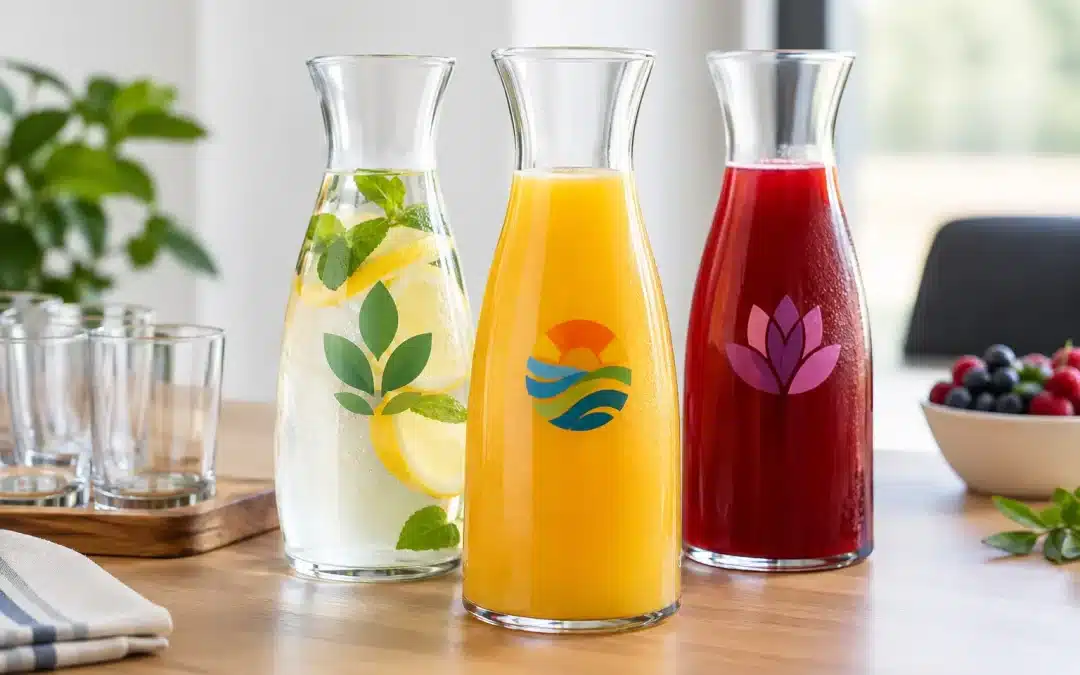
A well-chosen carafe does more than hold water, wine or batch cocktails. On a restaurant table, at a conference lunch or beside a wedding bar, it puts your logo in front of guests throughout the occasion. Knowing how to order logo carafes properly helps you avoid artwork surprises, unsuitable capacities and rushed production decisions.
For Australian event organisers, hospitality operators and marketing teams, the best order starts with the real-world use of the carafe. A polished design matters, but so does whether the vessel is practical for pouring, easy for staff to handle and appropriate for the drinks being served.
Start with the occasion and serving style
Before selecting a carafe, decide where it will be used and what it needs to do. A carafe for chilled table water in a café has different requirements from one used for sangria at a summer activation or as a commemorative gift at a corporate function.
Think about the number of guests, table setup and service pace. Larger carafes reduce refill trips in a busy venue, while smaller options may feel more refined for seated dining or tasting experiences. If guests will serve themselves, a stable shape and comfortable pouring profile are worth prioritising. For outdoor events, plastic logo carafes can be a practical choice where glass is unsuitable or breakage is a concern.
Also consider what guests will see alongside the carafe. Matching branded cups, wine tasters or plastic glasses can create a more considered presentation than a standalone item. This works particularly well for clubs, cellar doors, promotional launches and branded hospitality areas.
Choose the right capacity and material
Capacity affects both function and perceived value. A smaller carafe can suit individual table settings or premium beverage service, while a larger format is generally better for shared water, cocktails or wine. Rather than choosing solely on volume, picture the carafe on the actual table. Will it fit comfortably between menus, plates and centrepieces? Can staff carry several at once?
Material should match the venue and expected handling. Reusable plastic drinkware is lightweight, practical and well suited to events where safety, transport and durability matter. It can also be retained and reused after the event, giving the branding a longer life than disposable event items.
The finish makes a difference too. Clear carafes place attention on the drink and the printed logo, while frosted or coloured styles can support a particular campaign look. If you are supplying a hospitality venue, choose a style that complements existing tableware rather than competing with it.
Prepare artwork that prints clearly
Your logo needs to work at carafe scale. Fine details, narrow lines and very small type may look sharp on a screen but lose impact once printed on a curved surface. A simple, high-contrast version of your logo is often the strongest option.
Supply the best artwork file available, ideally a vector file such as AI, EPS or PDF. Vector artwork allows the design to be resized without becoming blurry and gives the production team a cleaner basis for print setup. High-resolution PNG files can sometimes be suitable, but screenshots, web images and photos of a logo rarely produce the result you want.
If you are ordering for a campaign, include any exact brand colours or Pantone references when requesting a quote. Colour matching can be particularly valuable where the carafe needs to sit alongside established packaging, signage or uniforms. Bear in mind that the final appearance can vary according to the carafe material, print method and chosen ink colour, especially on translucent surfaces.
Keep the message focused
A carafe has limited printable space, and that is usually an advantage. Your primary logo, event name, venue mark or short campaign line will be more memorable than a crowded design full of contact details.
For weddings and milestone celebrations, a monogram, names and date may be all that is needed. For commercial promotions, consider whether the logo alone does the job or whether a concise callout such as a product name or event hashtag has genuine value. If guests will photograph the carafe, a clean front-facing design is more likely to appear clearly in those images.
Select a print approach that suits the design
The best decoration method depends on the carafe material, artwork and intended use. Printed branding can deliver bold colours and strong visibility for logos, graphics and event designs. Laser etching offers a more subtle, permanent-looking finish on compatible drinkware and can suit premium gifts, staff recognition or commemorative pieces.
There is a trade-off. Bright multi-colour artwork may call for printing, while a restrained single-colour mark may look better etched. A quote-based supplier can assess your design and recommend the practical option rather than forcing the artwork into a one-size-fits-all process.
Ask to see a free digital proof before production begins. This is your opportunity to check spelling, logo placement, print size, colour references and orientation. Do not treat the proof as a formality. Confirm that the artwork is centred where intended and that it will be visible when the carafe is filled, held or placed on a table.
How to order logo carafes with the right quantity
Quantity decisions should take more than guest numbers into account. For a one-day event, allow for staff use, breakages, sampling stations and a small reserve. For a venue or club, consider how many are needed across a full service period, plus spare stock for replacements.
Ordering a higher quantity can improve unit value, but only when you have a realistic plan to use or store the stock. A restaurant launching a seasonal menu may want enough carafes for multiple sittings. A one-off birthday may be better served by a tailored quantity that leaves a few keepsakes without creating excess storage.
When requesting pricing, provide the quantity range if you are still deciding. For example, asking for costs at 100, 250 and 500 units can make the budget decision easier. Include whether you need one-sided or two-sided branding, the number of print colours and any individual packing requirements, as these details can affect the final quote.
Build production and delivery time into the plan
Custom drinkware is not an off-the-shelf purchase. Artwork review, proof approval, decoration and delivery all require time. The earlier you start, the more flexibility you will have with product choice, print options and freight planning.
Work backwards from the date the carafes must be on site, not the event date alone. A conference venue may need goods delivered several days earlier. A wedding planner may need time to unpack, wash and set the tables. If the order is travelling to regional Australia, allow extra time for freight and avoid leaving delivery arrangements to the final week.
Clear communication makes the process easier. Provide the delivery suburb, required-in-hand date, contact person and any venue delivery restrictions when you request your quote. If timing is tight, say so immediately. An experienced supplier can advise what is achievable and steer you towards suitable options.
Check the practical details before approving
Before production approval, confirm the capacity, dimensions, material, print position, quantity and delivery address. If the carafes will be used for beverages, ask about suitable care instructions so your team or recipients can keep them looking their best.
It is also worth considering reuse from the outset. A quality branded carafe can continue working after the event as merchandise, a venue service item or a useful gift for members and clients. That longer lifespan is where branded drinkware earns its place: it remains visible well after the banners have come down.
PlasticGlasses.net.au supports customers across Australia with tailored drinkware solutions, free digital proofs and hands-on assistance from its Victorian base. Whether you are planning a hospitality rollout or a personal celebration, providing a clear brief will help turn your logo into a practical piece guests will genuinely use.
A carafe may be a small part of the event setup, but the right one makes every pour feel considered. Start with the occasion, keep the artwork clear and give production enough lead time, and your branded drinkware can carry the experience long after the final toast.