
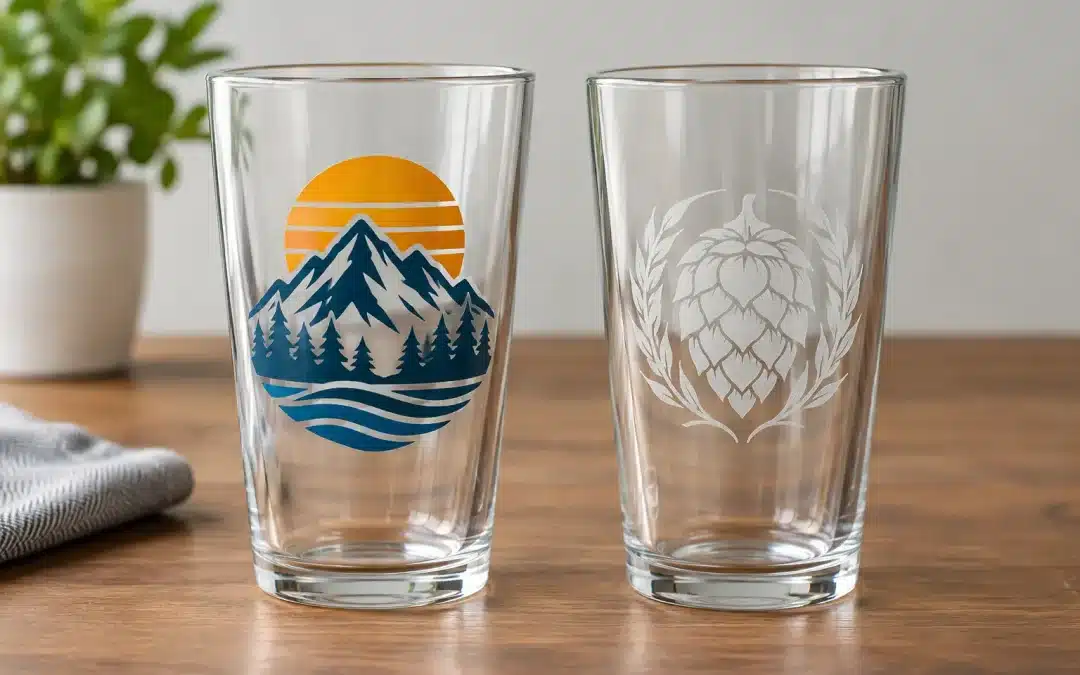
A branded cup has only a few seconds to make an impression – across a bar, in a crowd, or in the photo guests keep after the event. That is why the choice between screen print versus etching matters. Both methods can turn practical plastic drinkware into a memorable branded asset, but they create very different looks and suit different artwork, budgets and occasions.
For an outdoor activation that needs bold campaign colours, screen printing is often the natural fit. For a refined wedding, club anniversary or premium hospitality setting, laser etching can give plastic glasses a more understated finish. The right answer depends on how the glass will be used, how long the branding needs to stay visible, and what you want people to notice first.
Screen print versus etching at a glance
Screen printing applies ink directly to the surface of the glass through a prepared stencil. It is the best-known option for logos, event names, coloured artwork and messages that need to stand out from a distance. Pantone colour matching can help keep brand colours consistent across a larger campaign.
Laser etching uses a laser to mark the surface of suitable plastic drinkware. Rather than adding a printed layer, it produces a permanent-looking frosted or tonal design. The result is generally more subtle than print, with the appearance influenced by the colour and material of the glass itself.
| Feature | Screen printing | Laser etching | | — | — | — | | Overall look | Bright, bold and highly visible | Refined, tonal and understated | | Colour options | Ideal for single or multiple spot colours | Usually one etched appearance, not coloured artwork | | Best for | Promotions, campaigns, festivals and event branding | Premium keepsakes, hospitality and commemorative drinkware | | Artwork style | Logos, text, strong graphics and colour blocks | Fine line art, names, dates and simple marks | | Wear considerations | Long-lasting when properly produced, but surface print can show wear over time | Marking is highly resistant to rubbing because it is not an ink layer |
The comparison is useful, but it should not replace a look at your actual artwork. A detailed multi-colour logo and a single-line monogram have very different production needs.
When screen printing is the practical choice
Screen printing is designed for visibility. If your logo includes a recognisable colour, a sharp slogan or a design intended to pull attention at a busy event, printed plastic glasses are hard to overlook. Think branded beer cups at a sports club, reusable festival drinkware, corporate launch packs, fundraising events or a bar promotion where guests need to spot the sponsor quickly.
Colour is the key advantage. A navy logo, bright red campaign message or carefully matched brand green communicates more immediately than a tonal decoration. This is especially valuable when the glasses are part of a wider event identity that includes signage, staff uniforms, menus or social content.
It also gives organisers scope to be more expressive. A screen-printed design can use broad lettering, simple illustrations and high-contrast layouts that work well on clear, frosted or coloured plastic. For artwork with more than one colour, production requirements and costs will vary, so it is worth confirming the final design before committing to quantities.
Screen printing is not automatically the cheaper option in every order. Set-up is involved, particularly where artwork uses multiple colours or requires more than one print position. However, at event-friendly volumes, it can provide excellent value because the impact of a clear printed logo is immediate and repeatable across every glass.
Plan the artwork for the shape of the glass
A design that looks good on a flat screen may need adjustment for a curved wine taster, flute, mug or stein. Fine text can become difficult to read when wrapped around a rounded surface, while oversized artwork may compete with the drink inside. A digital proof helps show the scale, placement and likely result before production begins.
For screen printing, clear artwork with solid shapes generally delivers the strongest finish. Avoid relying on tiny type, delicate gradients or excessive detail if the goal is fast recognition from a few metres away. A simple, well-positioned mark often has more promotional value than a crowded design.
When laser etching suits the occasion
Laser etching is chosen for its quieter, more considered appearance. It works particularly well for personalised names, wedding dates, anniversary details, venue branding and logos where a premium feel matters more than bright colour. On the right plastic glass, the etched area catches the light without dominating the entire piece.
This makes etching a strong option for commemorative drinkware. A club celebrating a milestone, a winery hosting a tasting, or a couple supplying keepsake glasses for their reception may prefer a mark that feels less like advertising and more like part of the product.
The process also suits simple artwork beautifully. Initials, clean icons, short wording and single-colour-style logos are usually the most effective choices. If the brand relies on a distinct Pantone shade, a colourful illustration or several separate elements, etching is unlikely to reproduce that identity as faithfully as screen printing.
Not every plastic item will etch in exactly the same way. The material, finish and colour can change the contrast of the result. That is why confirming the drinkware style and reviewing a proof are worthwhile steps. An experienced supplier can advise whether your preferred cup and artwork will produce the clean, visible finish you have in mind.
Durability is about use, not just the decoration method
Buyers often ask which method lasts longer. Laser etching has an advantage where glasses will be handled and washed repeatedly because there is no raised ink layer to rub against. It is a sensible choice for reusable drinkware intended to stay in circulation at a venue, club or household.
Screen print can also be a dependable option when it is applied correctly to suitable drinkware. For single-use or short-run event cups, its lifespan is rarely the deciding factor. Even for reusable cups, the real question is how they will be treated after the event. Stacked transport, commercial washing, abrasive cleaning products and frequent use can all affect the appearance of a surface print over time.
This is where purpose matters. A one-night gala may benefit most from vivid colour and high guest visibility. A set of branded plastic mugs for a clubhouse may justify the quieter, harder-wearing etched finish. Neither method is inherently better – they solve different problems.
Cost, quantity and turnaround considerations
Your decoration choice should fit the full order, not just the unit price. Screen printing can involve artwork separation, screen preparation and colour-specific set-up. Etching has its own programming and machine time. Final pricing depends on the glass style, quantity, number of print colours, artwork complexity and placement.
For larger promotional runs, screen printing is often an efficient way to put a consistent logo into many hands. For smaller, more personalised orders, such as individual names or special dates, etching may offer greater appeal. If every glass requires different information, discuss this early, as variable personalisation changes the production approach.
Turnaround should be considered alongside artwork approval. Providing a clear logo file, knowing your required delivery date and approving the digital proof promptly all help keep production moving. Australian event schedules can be tight, particularly around Christmas, wedding season and major sporting periods, so allowing sensible lead time gives you more choice in drinkware and decoration.
Choosing the right finish for your brand
Start with the message you want the glass to carry. If it needs to shout your brand across a crowded function, choose screen printing. If it needs to feel like a lasting memento that guests will take home and use again, laser etching may be the better fit.
Then consider the drink itself and the setting. Beer glasses and festival cups often benefit from high-impact print. Wine tasters, flutes, mason jars and speciality cups can look excellent with either method, depending on whether the event calls for colour or a more elegant tonal mark. Mugs and steins used repeatedly by members or patrons can be particularly well suited to etched artwork.
At PlasticGlasses.net.au, a free digital proof provides a practical opportunity to assess your design on the selected product before production. It is the point where a good idea becomes an order you can feel confident putting on tables, sending to venues or handing to guests.
The best branded glass does more than hold a drink. Choose a finish that matches the occasion, make the artwork easy to recognise, and every refill becomes another moment your message is seen.