
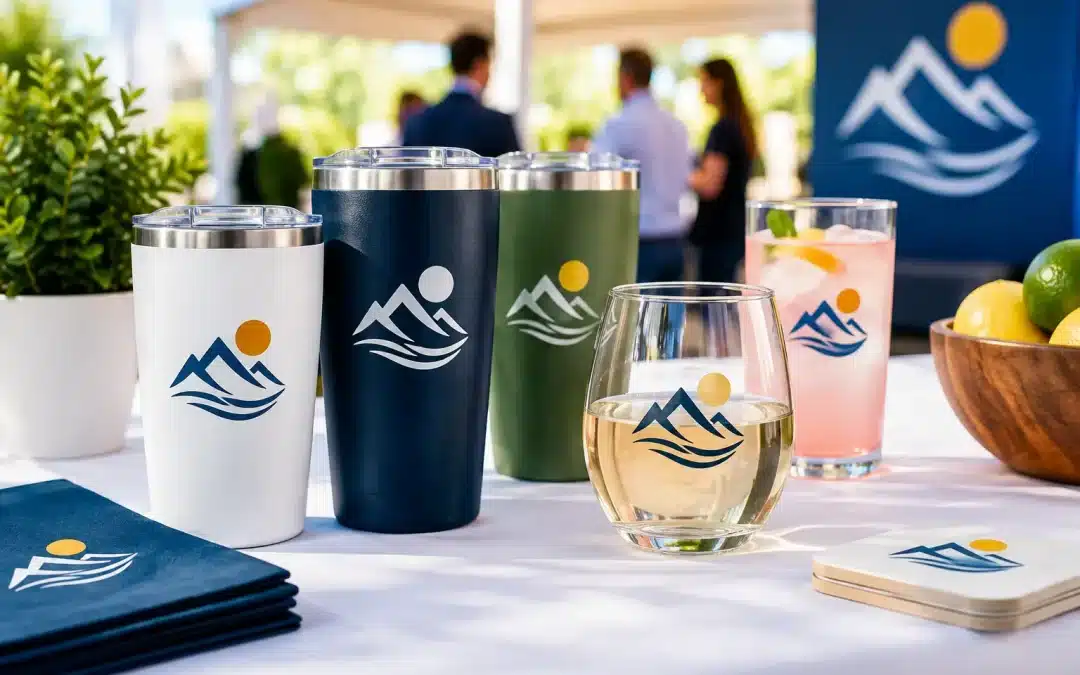
A crowded event is not automatically a successful activation. If guests cannot quickly understand what your brand is offering, remember who provided it, or take away something useful, the spend can disappear with the last song. This brand activation guide focuses on the practical decisions that turn a branded event moment into ongoing visibility – particularly when personalised drinkware is part of the experience.
Start with the behaviour you want to create
Brand activation is the point where people experience a brand rather than simply see its logo. It might be a product sampling station at a festival, a club presentation night, a hospitality promotion, a corporate function or a milestone celebration. The format changes, but the question stays the same: what should attendees do, feel or remember?
Be precise before selecting products or booking a site. A new venue may want guests to associate it with a polished, social atmosphere. A brewery may want people to try a limited release and share photos. A community club may be building pride and giving members an item they will use again. Each objective calls for a different activation design.
Avoid trying to achieve every goal at once. If lead collection is the priority, staff need a simple reason to ask for details and a clear process for recording them. If reach is the priority, visibility and shareable moments matter more than lengthy conversations. If retention is the goal, a useful takeaway can work harder than a short-lived giveaway.
Set a clear activation brief before ordering
A good brief protects the budget and makes custom production far easier. It should establish the event date, expected attendance, venue conditions, brand message, audience, quantity, distribution method and the result you will measure.
Quantity deserves more thought than a rough headcount. Consider staff, performers, VIPs, replacement stock and whether guests will receive an item on arrival, after an interaction or with a purchase. A tasting event where every attendee receives a cup needs a different allowance from a competition where only selected entrants receive one.
Also decide whether the drinkware is eventware, merchandise or both. Eventware needs to be safe, practical and easy for staff to distribute at pace. Merchandise should feel worthwhile enough to keep. The most effective option can do both: it improves the guest experience on the day, then travels home in a kitchen cupboard, picnic bag or workplace lunchroom.
Choose drinkware that suits the occasion
A branded plastic glass should earn its place in the activation. It must suit the beverage, the venue and the way guests will carry it. A premium-looking vessel can lift perceived value, while the wrong format can create inconvenience, slow service or leave branding hidden under a guest’s hand.
For beer launches, pub promotions and outdoor functions, plastic beer glasses, schooner-style formats, pots and steins make the product feel immediately relevant. Wine tasters and flutes suit tastings, weddings, awards evenings and more refined corporate events. Mason jars can create a casual, festival-ready feel, while specialty cups are useful where the activation calls for a distinctive shape or a larger branding area.
There is a trade-off between novelty and repeat use. An unusual cup can stop people in their tracks, but a familiar, well-proportioned glass is often more likely to be retained. Consider what a guest will do with it after the event. If the answer is “use it again”, the activation has a longer lifespan.
Plastic drinkware is especially practical for venues and events where glass is unsuitable or undesirable. It is lightweight, easier to manage in busy spaces and appropriate for many outdoor, poolside and high-traffic settings. Confirm venue requirements early, including any rules around serving sizes, responsible service and reusable or disposal arrangements.
Make the branding visible, not merely present
A logo printed too small, too low or in the wrong colour can turn a valuable product into an expensive missed opportunity. Artwork needs to be legible at arm’s length and positioned where it remains visible when the glass is in use.
Start with one primary message. In most cases, that is your logo or campaign name. Add a short line, event date or social handle only if it improves recognition. Trying to fit a full menu, several partner logos and a long slogan onto one cup usually weakens the result.
Colour selection should reflect both your brand and the drink inside the glass. Pale artwork may disappear against a light beverage, while a dark print can look stronger on clear drinkware. Pantone colour matching is valuable when brand consistency is non-negotiable, particularly for established organisations and campaigns running across several locations.
Ask for a digital proof before production and check it carefully. Review spelling, placement, scale, print colour and the version of the logo supplied. This is also the time to confirm whether print or laser etching best suits the chosen product and desired finish. A proof is not just an approval step – it is the final opportunity to make sure the item will deliver the visibility you paid for.
Give people a reason to keep it
The best branded drinkware is connected to a moment people want to remember. A limited-edition festival design, a wedding monogram, a club anniversary or a seasonal beverage launch gives the glass a story beyond the logo.
You can build this value through design, but distribution matters too. Presenting the glass as part of a tasting flight, ticket inclusion, membership pack or purchase-with-purchase offer makes it feel earned. Handing out hundreds of generic cups at the door may deliver volume, but it can reduce perceived value and create unnecessary waste.
Design the guest journey around the item
A personalised glass should not sit on a trestle table waiting to be noticed. Plan where it enters the experience. At a trade stand, it could be received after a product demonstration. At a sporting club function, it may be part of a commemorative drinks package. At a venue launch, it can be used to serve a signature beverage that reinforces the campaign theme.
Staff play a major role. Give them a short, natural line that explains why the item matters: “This is our launch glass for the new pale ale” is clearer and more engaging than “Here’s a cup”. If there is a competition, QR code or follow-up offer, make the next step obvious and keep it quick. Guests should not have to choose between enjoying the event and participating in your activation.
Think through practical handling as well. Where will stock be stored? Who restocks service points? How will used glasses be collected if they are being reused during the event? These details are less glamorous than the artwork, but they determine whether the activation feels organised.
Measure more than the number of glasses handed out
Distribution is an output, not necessarily an outcome. A thousand branded glasses given away tells you that stock moved. It does not tell you whether people engaged, remembered the brand or took a useful next step.
Choose measures that match the original objective. For a sampling campaign, track samples served, sales during the activation and repeat purchases where possible. For lead generation, record qualified contacts rather than simply counting entries. For an awareness-focused event, compare social mentions, tagged content, photo participation or post-event survey responses.
Retention is harder to measure, but it is often where drinkware delivers its strongest value. Ask customers or members whether they kept and used the item. Watch for guests bringing it back to future events, if that suits the format. A product with a long useful life can provide repeated brand exposure well after paid event signage has come down.
Keep a short post-event review while the details are fresh. Note the quantity used, the questions guests asked, any service bottlenecks, which design attracted attention and what stock remained. Those observations make the next activation more efficient and can prevent over-ordering or missed opportunities.
Work with a supplier who understands the event deadline
Custom drinkware has production steps: artwork preparation, proof approval, printing or etching, packing and delivery. Leaving the order until the final week limits product choice and places avoidable pressure on everyone involved. A clear brief and timely approval process give you more control over the final result.
For Australian events, local communication and dependable nationwide fulfilment can be as valuable as the product itself. PlasticGlasses.net.au supports tailored custom drinkware projects with free digital proofs, practical artwork guidance and more than 20 years of production experience, helping organisers choose a format that fits the occasion rather than forcing a one-size-fits-all solution.
Your activation does not need to be the loudest part of the event. It needs to give people a useful, well-branded reason to remember the experience when they are back at work, at home or planning the next catch-up.