
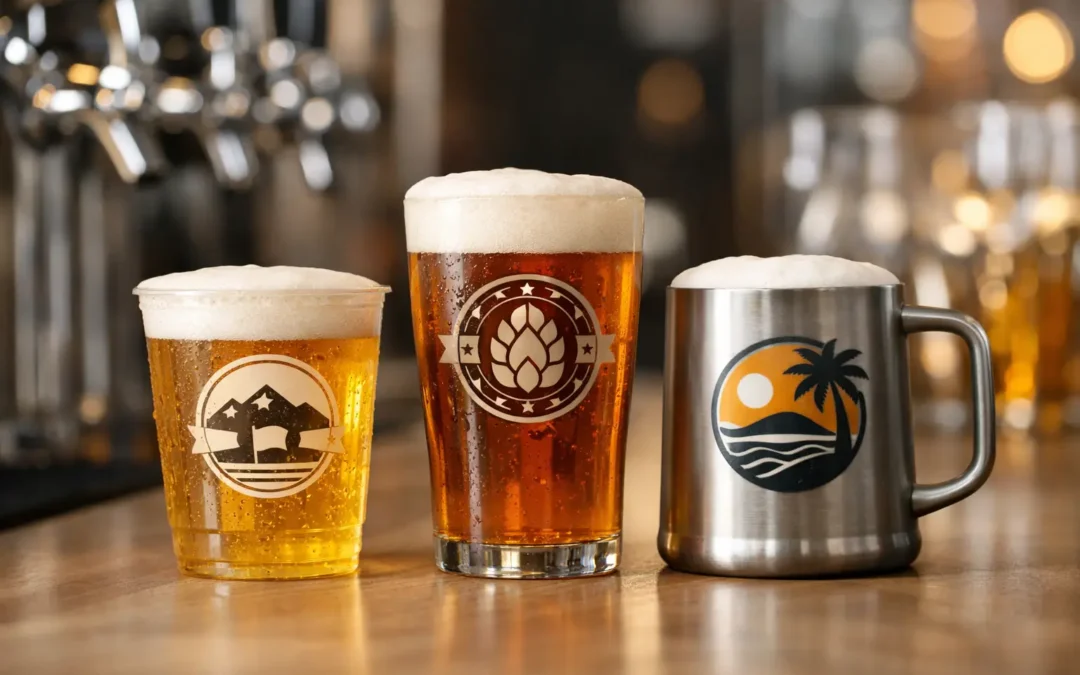
A custom beer cup has a short window to make an impression: the moment someone is handed a drink. At a packed festival, club presentation, brewery launch or backyard milestone, it needs to look the part, feel comfortable in hand and keep your branding visible well after the last pour. This guide to custom beer cups will help you make decisions that suit your event, artwork, budget and ordering timeline.
Start with the occasion, not the logo
The best cup is not necessarily the largest one or the one with the biggest print area. It is the format that works naturally for how guests will drink, move and remember the occasion.
For busy outdoor events, markets and sports clubs, durable reusable plastic beer cups are a practical choice. They are lighter than glass, easier to manage in high-traffic areas and give sponsors or club branding repeated exposure across the day. For a corporate function or product activation, presentation may lead the decision. A clear cup with a sharp, well-positioned print can make a simple pour feel considered and on-brand.
Personal celebrations call for a slightly different approach. Birthday designs, wedding dates, names and milestone messages turn drinkware into a useful keepsake rather than another disposable party item. If guests are likely to take their cups home, a more substantial beer mug, stein or specialty shape can add value to the experience.
Before choosing a style, consider whether the cup will be used for a single service, throughout a long event, or as merchandise and a memento. That answer influences material, capacity, print method and quantity.
Choose a beer cup style that suits the serve
Capacity matters because it affects both guest experience and venue operations. A smaller cup can be ideal for tastings, sample pours and promotional activations, where several products may be served during the session. Standard beer cup sizes suit most functions and hospitality settings, while larger mugs and steins create a more traditional feel for beer festivals, themed events and club celebrations.
Clear plastic offers a clean, versatile look and lets the colour of the beverage remain part of the presentation. Frosted styles can feel more premium and are often effective with bold, high-contrast branding. Coloured drinkware can create instant recognition for a sporting club, school house, campaign or themed event, although the artwork needs enough contrast to remain legible.
There is a practical trade-off between lightweight event cups and heavier reusable formats. Lighter cups are efficient for large volumes and easier to transport, while thicker reusable cups can better support a premium occasion or repeat use. Your expected guest numbers, service setup and budget should guide the choice.
Think about the guest journey
A cup used beside a bar has different needs from one carried around a festival site for hours. If guests are standing, dancing or moving between activities, choose a comfortable shape with a stable base. If the drinkware will sit on tables at a seated dinner, a more distinctive mug or beer glass style may better complement the setting.
For hospitality operators, consistency is equally valuable. Choosing a format that stacks, stores and handles easily can make service smoother for staff, especially during peak trade.
Get the artwork ready for print
Good branding begins with artwork that has been prepared for the cup, not simply copied from a website or social media profile. A high-resolution logo is helpful, but vector artwork is generally the strongest starting point because it retains crisp edges when resized. Files such as AI, EPS or print-ready PDF are often preferred, though a clear PNG may work for simpler designs.
Keep the design focused. Beer cups have a curved print surface, so fine detail, very small text and crowded layouts can lose impact from a distance. A bold logo, short message, event date or sponsor mark is usually easier to read while someone is holding the cup.
Colour selection deserves attention too. A white print can look excellent on darker cups, while black or deep-coloured artwork often stands out on clear and frosted options. Where precise brand colour is essential, Pantone colour matching can help keep the result aligned with your wider campaign materials. This is particularly useful for national promotions, franchises and organisations with established brand guidelines.
Ask for a free digital proof before production. It gives you the opportunity to check spelling, placement, proportions and colour direction before the order moves ahead. It is much simpler to refine a design on screen than after cups have been printed.
Select the right customisation method
Print and laser etching each create a different finish. The right method depends on the drinkware, the design and how you want the product to be perceived.
Printed custom beer cups are ideal for logos, event graphics, sponsor artwork and colour-led campaigns. They provide strong visual impact and work well when your branding needs to be recognised quickly across a room or venue. A single-colour design can be striking and cost-conscious, while multi-colour artwork may be worthwhile for campaigns where brand recognition relies on a specific palette.
Laser-etched drinkware has a more subtle, permanent-looking appearance and can suit premium gifts, commemorative events, staff recognition or special releases. It is especially effective where a refined finish matters more than bright colour. However, it will not reproduce a full-colour logo in the same way printing can.
There is no universal best option. A community club ordering hundreds of event cups may prioritise a bold, economical print. A business marking a major anniversary may prefer etched mugs that feel more like a gift. Sharing the intended use, quantity and artwork with your supplier early makes it easier to receive useful advice rather than a generic recommendation.
Order the quantity that works for your event
The number of guests is a starting point, not always the final quantity. For a one-off function where each person receives one cup, ordering close to attendance may be appropriate, with a sensible allowance for extras. For a venue, festival or long-running activation, cups may be used more than once or retained by guests, so additional stock can prevent a service shortfall.
Consider these four practical factors when confirming your quantity:
- Expected attendance and staff requirements.
- Whether guests will keep the cup or return it for refills.
- Additional cups needed for breakage, misplacement or last-minute attendees.
- Whether leftover stock can be used at future events, sold as merchandise or included in promotional packs.
Larger quantities can improve unit value, but only if the design has a useful lifespan. A generic branded cup may work across several campaigns or seasons. A cup printed with one date-specific event should be ordered more carefully, unless limited-edition merchandise is part of the plan.
Allow enough time for a considered result
Custom production involves artwork review, proof approval, printing or etching, quality checks and delivery. Leaving the order until the final week can limit product options and add unnecessary pressure, especially around peak event periods.
The most reliable approach is to begin as soon as the event date and approximate attendance are known. Even if your artwork is still being finalised, an early conversation can confirm suitable cup formats, likely production timing and any design considerations. Once the digital proof is approved, the process can move forward with fewer surprises.
For interstate delivery, build in extra time for freight. PlasticGlasses.net.au operates from Victoria and supplies custom promotional drinkware nationwide, so planning ahead helps keep your event schedule on track wherever you are in Australia.
Make every cup work harder for your brand
A beer cup can do more than display a logo. It can promote a sponsor, reinforce an event theme, mark a fundraising campaign or give guests a practical reason to remember your organisation. The most effective designs connect the cup to a clear purpose.
For example, a brewery launch might use a clean logo and seasonal release name. A sporting club could feature its crest alongside a membership message. A wedding may use the couple’s names and date in a design guests will happily keep. Keep the message relevant to the moment, then let the quality and usefulness of the cup carry it beyond the event.
When you are ready to choose, bring together your guest numbers, preferred cup style, artwork and event date. A clear brief gives your supplier the best chance to recommend a practical solution that looks right in guests’ hands and keeps your name visible long after the final toast.