
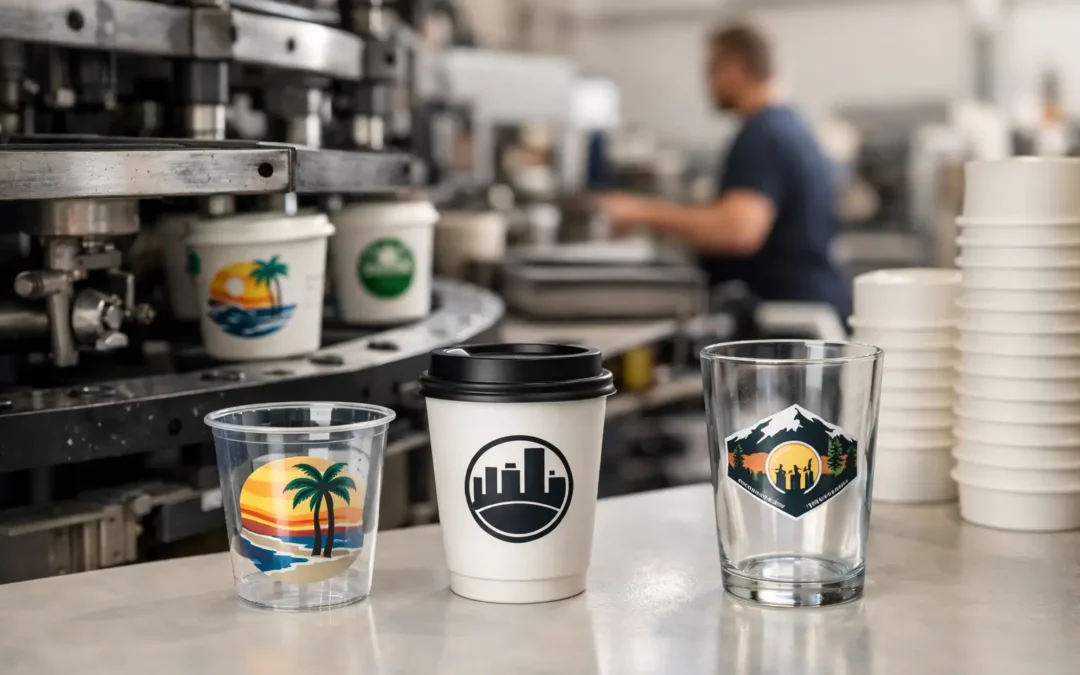
A launch date, wedding reception or festival gate time can arrive faster than expected. When branded drinkware is part of the plan, the question is usually not whether custom cups will look good – it is how long does cup printing take, from sending artwork to receiving the finished order.
For most custom plastic cup orders, the full process includes artwork preparation, approval of a digital proof, printing or laser etching, quality checks and delivery. The actual production time can be relatively quick once everything is approved, but the right lead time depends on the cup style, order quantity, decoration method and where the order needs to go in Australia.
How long does cup printing take from artwork to delivery?
A realistic timeframe for custom printed cups is often around two to four weeks from approved artwork to delivery. Simple orders with print-ready artwork, standard cup styles and sufficient production capacity may move faster. Larger campaigns, multi-colour designs, custom Pantone matching, laser-etched products or orders required during a busy event season can take longer.
The most useful way to plan is to work backwards from your event or campaign date. Allow time for a digital proof, production and freight, then add a buffer for any artwork updates or delivery delays. If your drinks service starts on a Friday, aim to have the cartons delivered well before the week of the event rather than relying on a last-minute arrival.
At PlasticGlasses.net.au, every order is assessed around its specific cup, branding requirements and quantity, so the available turnaround can be confirmed before production begins. This gives organisers and purchasing teams a clearer basis for scheduling rather than relying on a generic estimate.
What happens during the cup printing process?
The clock does not start only when an enquiry is sent. It starts properly once the key details are clear: the selected product, quantity, print position, artwork and delivery location. A quick, well-prepared approval process is one of the best ways to keep an order moving.
Artwork review and digital proof
The first stage is checking whether the supplied logo or design is suitable for the chosen print area. Vector artwork is generally preferred for clean, sharp branding, particularly where fine text, detailed marks or solid colour areas are involved. High-resolution files can also work in some circumstances, but a low-quality screenshot or image lifted from a website can limit the finished result.
A free digital proof shows how the artwork is expected to appear on the selected cup. This is the point to check spelling, colours, layout, logo size and any event date or contact details. Approval is essential because production should not proceed until everyone is confident the design is correct. A same-day response to the proof can save days; a proof left waiting for committee approval can push an otherwise straightforward job back.
Setting up the decoration
After approval, the artwork is prepared for the selected decoration method. Printed cups may require screen or print setup, depending on the design and application. Laser etching involves a different process and is suited to products and finishes that can be engraved.
The decoration method matters because it affects both appearance and timing. A simple one-colour logo on a standard plastic beer glass is often more straightforward than a design using several colours, tight registration or a precise Pantone requirement. Neither option is automatically better – the right choice depends on your artwork, budget, cup material and the look you want guests to remember.
Production and quality checking
Once setup is complete, the cups are printed or etched in the agreed quantities. Production teams check that the decoration is positioned correctly, the print is clear and the finished drinkware meets the expected presentation standard.
For an event order, consistency matters. Whether guests are picking up a reusable stein at a club event, a wine taster at a cellar-door activation or a personalised cup at a birthday, each item should carry your branding confidently. Quality checking is a necessary part of the lead time, not an optional extra to rush past.
Packing and freight
Finished cups are packed for transport and dispatched to your nominated address. Delivery timing varies by destination, particularly for regional, rural and remote areas. Victorian metro deliveries may have a different transit window from orders heading to Far North Queensland, Western Australia or the Northern Territory.
Freight is also subject to factors outside a supplier’s control, including carrier volumes, public holidays and severe weather. For this reason, production completion is not the same as delivery completion. Build freight time into the schedule from the beginning.
Factors that can make cup printing faster or slower
The difference between a smooth order and a delayed one is often decided before the first cup is printed. A few variables deserve attention when planning your timeline.
Order quantity: Larger runs naturally need more production capacity and packing time. They can offer excellent value for promotions and major events, but should be planned earlier than a small personal celebration order.
Cup style and stock availability: Standard plastic glasses, mugs, flutes, mason jars and specialty cups may have different availability. If a particular style is essential to your event concept, confirm it early rather than making the product selection the final step.
Print complexity: One-colour artwork is generally simpler to set up than a multi-colour design. Fine details, wraparound branding, metallic effects and exact Pantone matching can also require added preparation and checking.
Artwork readiness: A clear logo file and complete brief keep the proof process efficient. If artwork needs redesigning, colours are undecided or multiple stakeholders are making changes, allow more time.
Seasonal demand: Christmas functions, end-of-financial-year promotions, school and club events, wedding season and major sporting periods can all increase demand. Ordering early gives you more choice and reduces pressure.
How to avoid delays on custom plastic cups
Start with a firm in-hands date, not just the date you would like to place the order. Tell your supplier when the cups must be delivered, where they are going and whether the deadline is linked to an event, product launch or venue booking. That information makes it easier to recommend a practical production and freight schedule.
Have the artwork, quantity and preferred cup style ready before requesting a quote. If you are choosing between options, narrow the decision to a couple of suitable formats rather than reviewing every possible product at once. For example, a reusable beer glass may suit a brewery promotion, while a flute or wine taster may better match a formal celebration.
Keep proof approval with one nominated decision-maker where possible. It prevents the common problem of late changes after several people have reviewed a design. If names, dates or sponsor logos are involved, check every detail carefully at proof stage. Changing artwork after approval can require the job to be reset and may affect the delivery date.
For urgent requirements, ask what is realistically achievable instead of assuming every product can be rushed. There may be a suitable in-stock cup, a simpler print option or an alternative quantity that fits the available timeframe. Honest planning protects the quality of the finished product and avoids unnecessary stress for your team.
Is laser etching quicker than printing?
Not always. Laser etching and printing use different equipment, materials and setup processes, so their turnaround depends on the specific product and artwork. Laser etching can create a refined, permanent-looking finish on compatible drinkware, while printed branding is ideal for strong colour reproduction and highly visible campaign artwork.
Choose the finish for the result you need first, then confirm the production window. A logo designed around bold brand colours may be better served by printing, while a premium commemorative item may benefit from etching. The fastest option is only useful if it still suits the occasion and represents your organisation well.
If your date is fixed, organise your cup printing as early as you organise the venue, catering or promotional campaign. A clear brief, approved proof and sensible delivery buffer turn customised drinkware from a deadline risk into a practical brand asset guests can use, keep and remember.