
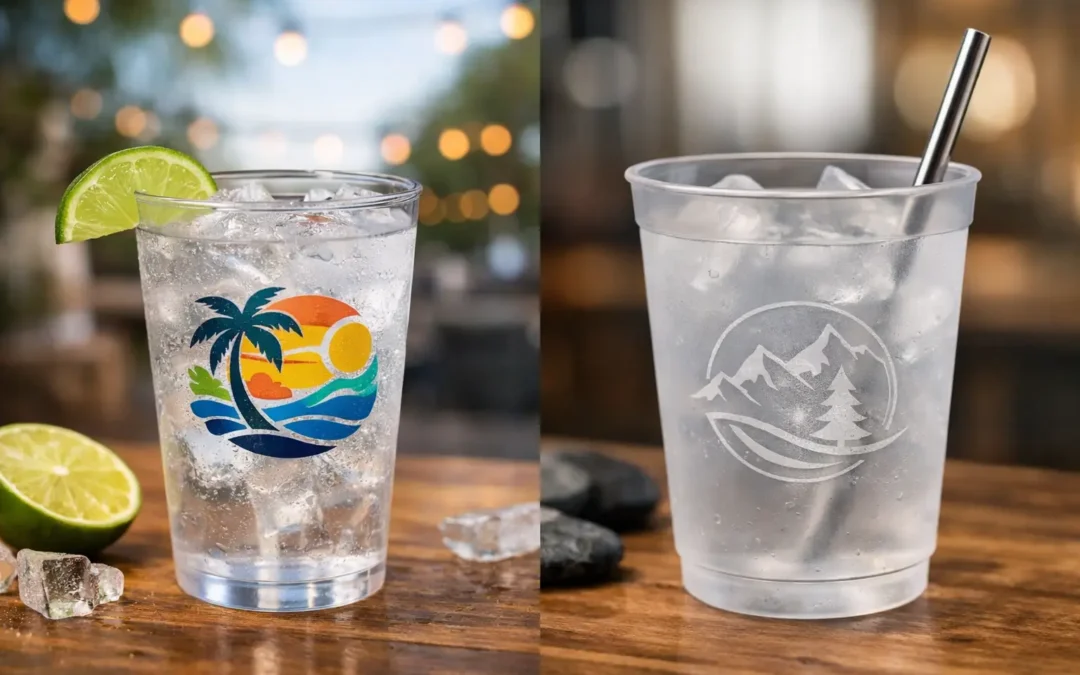
A glass handed to every guest at a brewery launch, club presentation or wedding reception has one job while the event is on: serve a drink safely. Afterwards, it can keep doing something far more valuable – put your name, logo or message back in front of people. Choosing between printed versus engraved plastic drinkware determines how that branding looks, feels and lasts.
Neither option is automatically better. Printing gives you colour, flexibility and immediate visual impact. Laser engraving creates a refined, permanent mark that suits reusable drinkware particularly well. The right choice comes down to your artwork, the occasion, expected reuse and the impression you want guests or customers to take away.
Printed versus engraved plastic drinkware: the key difference
Printed plastic drinkware applies ink directly to the surface of the glass, cup, mug or stein. It is a highly adaptable decoration method for logos, event details, sponsor marks and campaign artwork. Depending on the design and product, printing can reproduce single-colour branding, multiple colours and carefully matched Pantone colours.
Engraved, or laser-etched, drinkware uses a laser to mark the surface of suitable plastic. Rather than adding an ink layer, the process creates a crisp etched finish. The result is generally more subtle than a bright print, but it has a premium tactile quality that works especially well on quality reusable glasses.
Think of print as your high-visibility branding choice and engraving as your long-term, understated finish. Both can turn practical drinkware into a memorable promotional product.
When printed drinkware is the practical choice
Printed drinkware is often the natural fit when your artwork depends on colour. A bright brand palette, coloured sponsor logos, themed event graphics or a detailed illustration needs a decoration method that can show those elements clearly. For activations, festivals and large celebrations, bold print can make a cup easy to recognise from across a crowded bar or function space.
It is also well suited to short-term messages. A conference date, fundraising slogan, product launch line or one-off birthday design can be printed prominently without needing to be timeless. That makes printed plastic glasses useful for occasions where the event itself is central to the design.
For hospitality and promotional campaigns, print supports clear brand recall. A logo on a beer glass, wine taster, flute or specialty cup is visible while guests are holding it, and it remains part of the experience in photos. If the goal is to make a message noticed quickly, a strong print usually has the advantage.
Printing is not limited to large artwork. A clean one-colour logo can look polished and professional, particularly when positioned thoughtfully. The key is choosing a design that suits the print area and the shape of the drinkware. Tall artwork may work better on a straight-sided tumbler than on a curved wine glass, for example.
Best uses for printed plastic glasses
Printed finishes are particularly effective for branded eventware, venue promotions, sporting clubs, community fundraisers, corporate functions, trade displays and milestone parties. They are also a sensible option when colour accuracy matters or when you need a design that aligns closely with existing campaign materials.
The trade-off is that printed decoration sits on the surface. Good production and appropriate care deliver an excellent result, but a printed glass will not have the same etched feel as laser engraving. If guests are likely to keep and use the drinkware for years, it is worth considering whether durability of the mark is your highest priority.
Why engraved drinkware feels more permanent
Laser-etched plastic drinkware has a quieter, more considered presence. The decoration does not rely on colour to stand out. Instead, it catches the light and creates contrast through the surface itself. This makes engraving a strong choice for simple logos, names, monograms, dates and text-based designs.
Because the mark is etched into the surface, engraving is well suited to reusable drinkware intended to stay in circulation. A personalised plastic mug for a club, a commemorative stein for a milestone event or branded venue glassware can feel less like a disposable giveaway and more like a useful keepsake.
Engraving also works beautifully when the glass shape has character. Mason jars, steins, beer glasses and sturdy specialty cups can take on a more premium look with a restrained etched logo or message. For weddings and anniversaries, names and dates engraved on reusable plastic drinkware offer a polished alternative to more decorative printed artwork.
However, laser engraving is not designed to reproduce full-colour logos. Fine photographic detail, gradients and multi-colour illustrations are better suited to printing. Engraving performs best when the artwork is clear, high contrast and uncomplicated.
Best uses for laser-etched plastic glasses
Engraved drinkware is a strong option for hospitality venues, golf days, club merchandise, corporate gifting, premium event packs and celebrations where guests are likely to take their glass home. It is especially effective for designs that need to remain relevant beyond a single event date.
The visual result can be more understated than print, which is ideal for some brands and occasions but not all. If your logo relies on a distinctive bright colour or you need maximum visibility during a busy activation, engraving may not deliver the immediate impact you want.
Match the decoration to the artwork
The artwork should lead the decision, not follow it. Start by looking at what must appear on the drinkware. If your design includes coloured elements, multiple sponsor logos or a campaign graphic, printing will usually provide the clearest outcome. If it is a single-colour logo, a name, initials or a simple emblem, either option may work.
Fine lines and small text need careful consideration with both methods. A design that looks sharp on a computer screen may need adjustment to remain legible once applied to a curved plastic surface. This is where a digital proof is valuable. It lets you check the artwork size, placement and overall balance before production begins.
For engraved designs, simplify wherever possible. Remove tiny details that will not translate well and give text enough breathing room. For print, ensure supplied artwork uses clean, high-resolution files and confirm the required brand colours. A supplier with Pantone colour-matching capability can help keep promotional drinkware aligned with your wider branding.
Consider how the glass will be used after the event
A useful question is: will this glass be used once, several times during an event, or regularly for years? The answer can make the choice clearer.
A printed cup is ideal when the event message is the feature. It turns every drink into a branded moment and supports fast recognition. This is valuable for a festival, campaign launch, ticketed function or fundraiser where the date, theme or sponsors matter as much as the logo.
Engraving suits drinkware designed to become part of everyday use. A durable reusable plastic beer glass or mug with a permanent etched mark has appeal for venues, clubs and organisations building a longer-lasting connection with customers or members.
There is also a middle ground. A wedding couple may choose printed plastic flutes for a colourful themed reception, while a business may select engraved steins for staff recognition. The occasion, audience and intended lifespan should all carry weight in the decision.
Budget, quantities and production planning
Budget matters, but it should not be viewed only as a per-unit figure. Consider what the finished drinkware needs to achieve. A high-volume promotional run may benefit from bold printed branding that generates broad exposure. A smaller run for an executive event or club anniversary may justify the more refined look of engraving.
Quantity, product type, artwork complexity and decoration area can all affect the final quote. The most efficient option for one project may not be the most suitable for another. Asking for guidance early helps avoid choosing a glass first and discovering later that the desired artwork is not the best match for it.
Allow adequate time for artwork approval and production, particularly when an event date cannot move. Clear communication about quantities, delivery location and required-in-hand date helps keep the process straightforward. For national orders, it is also wise to factor delivery time into the overall schedule rather than treating it as an afterthought.
Make the finish part of the event experience
Your custom drinkware should feel intentional. A neon printed cup can reinforce the energy of a summer promotion. An engraved plastic wine taster can add polish to a cellar door event. A coloured print on reusable beer glasses can give sponsors meaningful visibility, while laser-etched mugs can make members feel recognised.
At PlasticGlasses.net.au, the best result begins with a conversation about your artwork, event, quantity and finish. A free digital proof gives you the confidence to see how the design will work before committing to production.
Choose printing when colour, campaign visibility and expressive artwork are the priority. Choose engraving when a permanent, refined finish and ongoing reuse matter most. The glass may be plastic, but the right decoration can leave a lasting impression.