
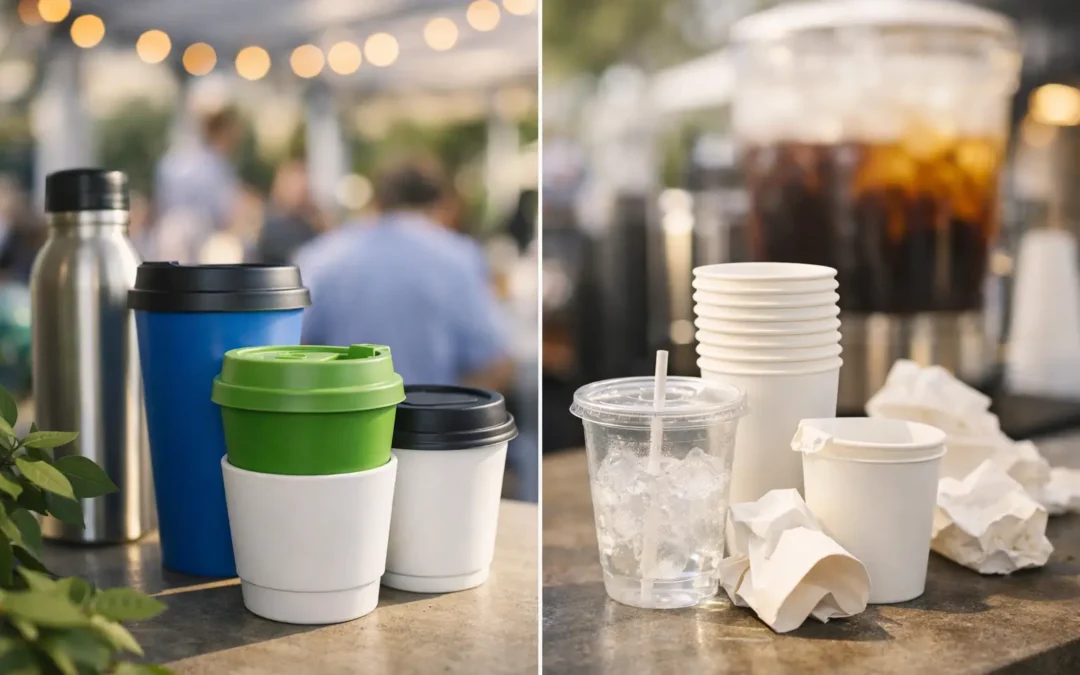
A busy bar at a festival, club presentation or corporate function can go through hundreds of cups before the first speech is finished. That makes the choice between reusable cups versus disposable cups more than a minor purchasing detail. It affects your event budget, rubbish volume, serving speed, guest experience and the visibility of your brand.
For many Australian organisers, reusable plastic drinkware is the practical long-term choice. It is durable, safer than glass in high-traffic settings and can carry a logo, event artwork or personalised message long after the final drink is poured. Disposable cups still have a place, particularly where collection and washing are not realistic. The best option depends on how the cups will be used, who is attending and what you want the event to achieve.
Reusable cups versus disposable cups: the practical difference
Disposable cups are designed for one use. They are usually inexpensive to buy upfront, easy to distribute and do not need to be collected or washed. For a small gathering with limited facilities, that simplicity can be appealing.
Reusable cups are made to withstand repeated use. In an event setting, they can be washed and returned to service throughout the day, retained by guests as a souvenir or supplied for future functions. A quality plastic cup also reduces the breakage risk associated with traditional glassware, which matters at outdoor events, venues with strict safety requirements and celebrations where people are on the move.
The central difference is not simply the material. Disposable cups solve an immediate convenience problem. Reusable cups can support a broader event plan – one that includes presentation, branding, waste reduction and a more considered guest experience.
Cost: look beyond the unit price
A carton of disposable cups will generally cost less than an equivalent number of reusable cups. If every guest uses one cup and the event is over in a couple of hours, the upfront comparison can appear straightforward.
However, disposable use can rise quickly when guests lose their cup, return for different drinks or take fresh cups at each service point. Larger functions may also need extra bins, rubbish collection and staff time to manage overflowing waste. These costs are easy to overlook when planning an event budget.
Reusable cups involve a higher initial outlay, but their value improves when they are used more than once. A hospitality venue, sporting club or organisation that runs regular events can keep branded cups in circulation. For weddings, milestone birthdays and promotional activations, guests may take them home, turning eventware into a useful memento rather than a single-use expense.
There is no universal cheapest choice. A one-off event with no washing capacity may be better suited to disposable options. For repeat events or campaigns where the cup itself is part of the experience, reusables often offer stronger overall value.
Waste and event presentation
A full rubbish bin of crushed disposable cups is rarely a good look beside a carefully styled event space. It can also make pack-down slower and leave organisers with a significant volume of waste to manage.
Reusable plastic cups can substantially reduce the number of items thrown away during an event, especially when paired with a simple return system. Some organisers issue one cup per guest at entry; others use a small deposit or token arrangement to encourage returns. The approach does not need to be complicated. Clear signage and a designated collection point are usually enough for a well-managed function.
The environmental benefit depends on repeat use. A reusable cup needs to be used enough times to justify the resources involved in making and washing it. That means it is worth planning what happens after the event. Will the cups be collected, cleaned and stored for next time? Will guests keep them? Or will they support a longer-term branded campaign?
When reusable cups are treated as a lasting asset rather than a throwaway novelty, they make more practical sense from both a waste and value perspective.
Branding: a cup can do more than hold a drink
For businesses, clubs and event organisers, custom drinkware creates a highly visible branding opportunity. Unlike a disposable cup that is discarded within minutes, a reusable branded cup stays in guests’ hands through the event and may travel home with them afterwards.
A logo, campaign message, event date or personalised design can turn a practical item into part of the occasion. Beer glasses suit breweries, pubs and sporting clubs. Wine tasters and flutes can add a polished touch to corporate functions and weddings. Mugs, steins and mason jars can support themed celebrations, merchandise programs and community events.
Print quality matters here. Artwork should be clear at the size of the cup, colours should align with your brand where required, and the design needs to suit the intended use. A simple one-colour logo may be ideal for a large club order, while a detailed full-colour design can be better suited to a launch, activation or commemorative event.
For organisations that need support with artwork, quantities and drinkware selection, PlasticGlasses.net.au provides custom plastic glass options with digital proofs before production. That gives buyers the opportunity to check the presentation before committing to a final run.
Hygiene and operations at busy events
Hygiene is often raised in the reusable versus disposable debate, particularly for food service, large crowds and public events. Disposable cups are straightforward: use once, then dispose of them. That is why they can be useful where there is no access to dishwashing or a reliable collection process.
Reusable cups require a plan, but that plan can be simple. Cups intended for immediate reuse should be washed using appropriate commercial procedures. Cups that guests retain throughout the event should not be swapped between people. At functions where guests take cups home, the organiser does not need to manage post-event washing at all.
Operationally, think about your service setup before ordering. Consider where clean cups will be stored, how used cups will be returned, whether staff can wash them during the event and how many extras are needed for peak periods. A smaller event with a bar dishwasher may manage reusable cups easily. A remote outdoor event without water access may be more suited to a disposable option, or reusable cups issued for guests to keep.
Choosing the right option for your occasion
The right cup choice should follow the realities of the event, not a blanket rule. Start with guest numbers, venue facilities, drink type, event duration and whether the cup has a promotional role.
Reusable plastic cups are particularly well suited to recurring club functions, hospitality venues, brewery events, school and community fundraisers, weddings, corporate occasions and branded activations. They are also a sensible choice where safety rules discourage glass and where a souvenir adds to the experience.
Disposable cups may be appropriate for short, low-budget gatherings, emergency stock, remote locations or situations where there is no ability to collect and clean drinkware. If disposables are necessary, choose the right size and format so guests are less likely to need multiple cups throughout the day.
For either option, avoid ordering on price alone. A cup that is too flimsy, too small or poorly suited to the beverage can create more waste, more complaints and a less polished impression. Select drinkware that feels right for the occasion, whether that means a lightweight tasting cup, a sturdy beer glass or a celebratory flute.
Make the cup part of the experience
The most effective event drinkware is planned early, alongside catering, signage and guest flow. Allow time to finalise artwork, approve a proof and choose a quantity that accounts for staff, breakage allowances and likely guest demand. If the cups will be kept, make that clear in the event messaging so guests understand they are receiving something of value.
A well-chosen reusable cup can carry a brand, reduce event rubbish and give people a practical reminder of a great occasion. When disposal is the sensible operational choice, use it deliberately and keep the service setup simple. The useful question is not which cup is always better, but which one will work hardest for this particular event.