
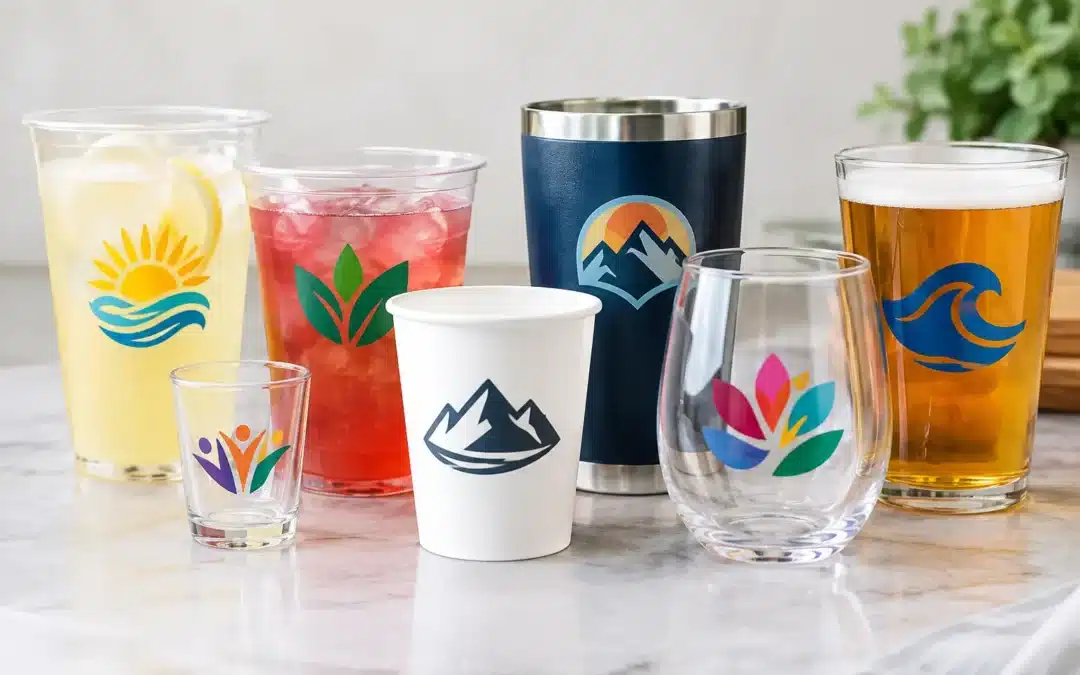
A 200-person function can be let down by something as simple as a cup that is too small for the serve, too large for the drink, or awkward to carry through a busy venue. If you are wondering what cup sizes are available for your event, the right answer depends on what is being poured, how guests will use it, and the impression you want your branding to make.
For promotional activations, weddings, club events and hospitality service, plastic drinkware is more than a practical alternative to glass. It is a visible part of the guest experience. Selecting the right capacity helps control pours, minimise waste, support service speed and give your printed design the space it deserves.
What cup sizes are available for personalised drinkware?
Custom plastic cups and glasses are commonly available in capacities ranging from small 200 mL tasting cups through to generous 500 mL and 570 mL beer serves. Between those ends of the range are the everyday sizes that suit most events: 285 mL, 300 mL, 350 mL and 425 mL.
The best size is not always the biggest. A wine tasting needs a compact vessel that encourages measured pours. A summer beer garden or sporting club event may need a larger cup that holds a full serve with room for a head. Water stations, soft drinks and mixed beverages often call for a versatile mid-sized option.
Exact availability can vary according to the cup style, material, production schedule and quantity required. That is why it is useful to start with the drink menu and event format, then match a suitable glass shape and capacity to the job.
Small cups: 200 mL to 250 mL
Smaller cups are a practical choice when portions are deliberately controlled. They work particularly well for wine tasters, spirit samples, tasting paddles, juice, kids’ drinks and welcome beverages. Their compact format can also suit product launches where guests are moving between stations rather than settling in for a full meal.
A 200 mL cup is not designed for every beverage, but it can be exactly right for a carefully measured pour. For wineries, breweries and food festivals, smaller branded cups can reduce over-pouring while still keeping your logo in every guest’s hand.
These formats also suit events with several beverage options. Guests can sample more than one product without carrying a large, half-finished drink from stall to stall. If your artwork includes fine text, keep in mind that a small print area benefits from a clean, high-contrast design.
Everyday event cups: 285 mL to 350 mL
For many organisers, the 285 mL to 350 mL range is the reliable all-rounder. It is large enough for soft drink, water, cocktails and modest beer serves, without feeling oversized or difficult to stack and store. This makes it a sensible option for corporate functions, community fundraisers, school events and branded promotions.
A 285 mL capacity is close to a traditional middy-style serve, while 300 mL and 350 mL options offer a little more flexibility for ice, mixers or non-alcoholic drinks. If your event is serving several types of beverages from one service point, this range can simplify ordering and reduce the number of different items staff need to manage.
From a branding perspective, these cups tend to offer a balanced printable area. A business logo, event name or sponsor mark is easy to see without dominating the design. They are also a practical size for reusable takeaway drinkware, particularly when you want guests to keep the cup after the event.
Larger cups: 425 mL to 500 mL
Larger plastic cups are made for more generous serves and high-energy occasions. A 425 mL cup is often well suited to beer, cider, long drinks, cocktails and soft drinks with plenty of ice. It provides a substantial feel in the hand while remaining manageable for busy bars and event spaces.
The 500 mL size is a strong choice for festivals, outdoor functions, sporting venues and hospitality settings where guests expect a full-sized beverage. It gives bartenders room to pour without spills and gives event branding greater visibility from a distance.
There is a trade-off, of course. Larger cups use more product and can encourage a bigger pour, which may not suit every drinks package or responsible service plan. They also take up more space in storage and transport. Where waste reduction and controlled service are priorities, a mid-sized cup may provide better value.
Pint and specialty sizes: 570 mL and beyond
For beer-focused events, a 570 mL pint-style cup is a familiar and popular format. It suits pubs, clubs, brewery events, race days and occasions where the drink itself is central to the experience. A well-designed printed pint cup can work as useful barware on the day and memorable merchandise afterwards.
Specialty drinkware gives you further options beyond standard round cups. Beer mugs and steins create a traditional, solid presentation for themed events. Wine glasses and tasters suit cellar doors, weddings and catered functions. Flutes bring a celebratory feel to sparkling wine service, while mason jars can complement rustic weddings, garden parties and casual outdoor venues.
The capacity should always support the vessel’s purpose. A flute may hold less than a standard cup but delivers a far more appropriate experience for sparkling wine. Likewise, a handled beer mug may be the better choice for a German-inspired event even if a plain pint cup holds a similar volume.
How to choose the right cup size for your occasion
Start with the drinks you are serving. Beer, wine, sparkling, cocktails, water and soft drinks each benefit from different capacities and shapes. If the menu is broad, a versatile 300 mL to 425 mL cup may cover most requirements. If the event has a premium or themed focus, choosing separate drinkware styles can lift the presentation.
Next, consider how guests will move around the venue. A seated dinner allows for more specialised glass shapes and smaller stemmed-style options. At a standing networking event, trade show or festival, lightweight cups that are easy to hold, stack and dispose of or reuse are often the more practical solution.
Service method matters too. For bar service, select a size that lets staff pour accurately and quickly. For self-serve water stations, a smaller cup may limit unnecessary waste. For pre-poured welcome drinks, choose a shape that is stable on a tray and leaves enough room to avoid splashes.
It is also worth thinking about your artwork before committing to a size. A larger cup creates more room for prominent logos, campaign messaging and sponsor recognition. Smaller cups can still look excellent, but the design needs to be simpler. Bold logos, clear type and carefully matched colours generally produce the strongest result on custom plastic drinkware.
Make capacity work harder for your brand
A branded cup does more than hold a drink. It can reinforce a campaign theme, make a sponsor visible in event photos and give guests a useful keepsake to take home. The capacity and format you choose should support that purpose.
For example, a brewery launch may use small tasting cups for samples and larger pint cups for full pours, with matching artwork across both. A wedding may pair personalised flutes for the toast with 350 mL cups for water and soft drinks. A club can select durable beer cups or mugs that feature its crest for presentation nights, fundraisers and regular bar service.
At PlasticGlasses.net.au, the most effective custom orders begin with a clear brief: what you are serving, how many guests are attending, where the drinkware will be used and what you want people to remember. With the right size selected early, digital proofs and custom branding can be planned around a product that genuinely suits the occasion.
Before you finalise an order, allow room in your decision for guest numbers, drink types, storage, serving conditions and the lead time needed for custom production. A cup that fits the event well will feel considered from the first pour to the last photo, and it gives your brand a practical place in the celebration.