
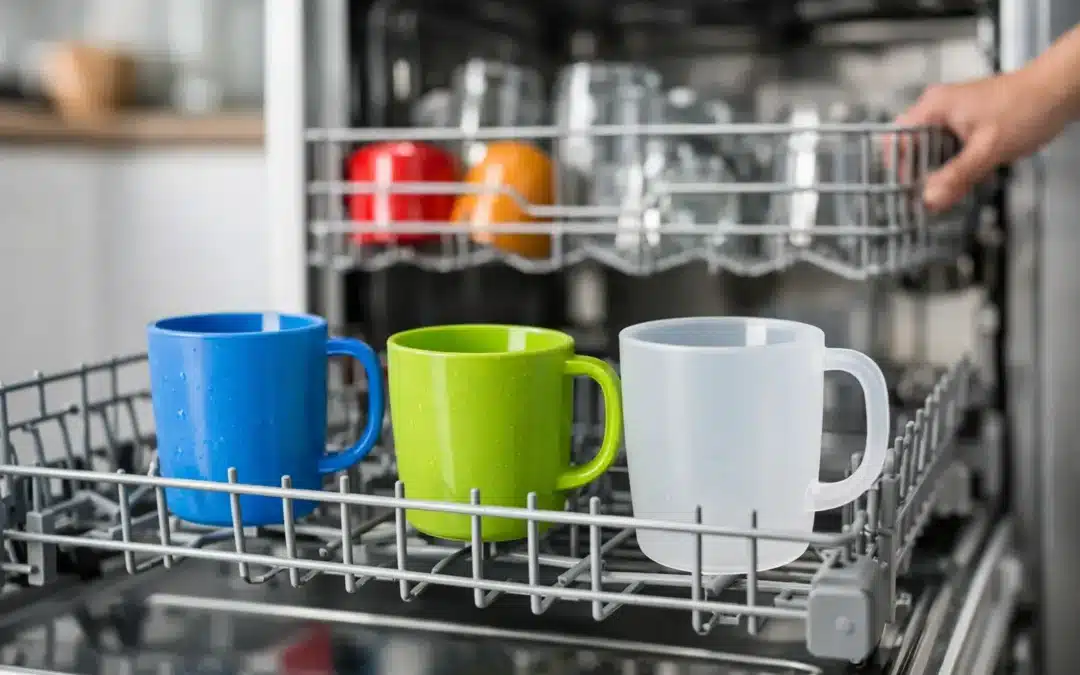
A branded mug that comes out of the dishwasher cloudy, warped or with a faded logo is not much use at the next function. So, are plastic mugs dishwasher safe? Some are, but the answer depends on the plastic resin, the mug’s construction and the way its custom artwork has been applied. The safest approach is to follow the supplier’s care advice for the specific product rather than assuming every reusable plastic mug can handle a hot wash cycle.
For venues, clubs, promotional campaigns and celebrations, dishwasher-safe drinkware can make pack-down and reuse far more practical. It can also extend the life of a personalised item that is meant to keep a brand, event date or message visible well beyond one occasion.
Are plastic mugs dishwasher safe for regular use?
Plastic mugs marked dishwasher safe are designed to tolerate the heat, water pressure and detergent used in a domestic or commercial dishwasher within stated conditions. That marking matters. Plastic is not one material: different polymers react differently to heat, chemicals and repeated washing.
A quality reusable mug made from an appropriate food-grade plastic may perform very well through regular dishwasher cycles. Others are better washed by hand, particularly lightweight novelty mugs, older items with no care information, or products with delicate decorative finishes. A mug can also be safe for a single dishwasher cycle yet lose clarity, shape or print quality after frequent high-heat washes.
For event buyers, this distinction is worth checking before ordering. A one-off birthday or product launch may prioritise cost, colour and presentation. A sports club, brewery, hospitality venue or corporate kitchen needs drinkware that can be cleaned efficiently and returned to service repeatedly. Tell your supplier how the mugs will be used so the recommended product suits the job.
Start with the material and care marking
The base material is the first clue. Polypropylene is commonly used for reusable drinkware because it is lightweight, durable and generally handles day-to-day washing well when the product is specifically rated for dishwasher use. It is often a practical option for outdoor events, community clubs and promotional giveaways.
Other clear plastics can offer a more glass-like look, which suits premium functions and branded bar service. However, clear plastic materials vary widely. Some may become hazy from dishwasher heat or strong detergent over time, while others are formulated for better heat and impact resistance. Acrylic-style mugs, for example, often deserve more cautious care unless their manufacturer confirms dishwasher suitability.
Check the base of the mug and its original packaging for a dishwasher-safe symbol or written instructions. If there is no marking, do not treat it as dishwasher safe by default. Ask the supplier for product-specific guidance, including whether the advice applies to domestic machines, commercial machines, or both.
The dishwasher-safe symbol is not a universal promise that every cycle is suitable. A very hot sanitising programme, prolonged drying heat or aggressive commercial detergent can be tougher on plastic than a standard home cycle. Follow any stated temperature limits and placement advice.
Why the top rack usually matters
For plastic mugs approved for dishwasher use, the top rack is generally the safer position. It keeps the mug further from the heating element and reduces exposure to the most intense heat. This helps minimise the risk of distortion, especially around the rim, handle and base.
Avoid forcing mugs into a crowded rack. A mug that shifts during the cycle can rub against metal racks, plates or glassware, leaving scratches that dull its finish. Place it securely with space for water to circulate, and make sure it cannot collect dirty water inside.
Heat is the main risk to plastic drinkware
Heat can affect even durable plastic over time. It may cause a mug to soften slightly, lose its original shape, develop stress marks or become less clear. The risk rises when a product is placed near the dishwasher’s heat source or repeatedly exposed to high-temperature programmes.
A standard household cycle is usually gentler than a high-temperature commercial wash. Commercial dishwashers are valuable in busy hospitality settings, but their faster, hotter cycles and concentrated detergents can be demanding. If mugs will be washed behind a bar or in a commercial kitchen, confirm that the selected drinkware is suitable for that environment before committing to a larger branded order.
The drying cycle also deserves attention. If your machine has an intense heated dry setting, switching to air drying can be a sensible option for reusable plastic mugs. It reduces heat exposure and can help preserve both the mug and its decoration over a longer service life.
What happens to custom printing in the dishwasher?
A mug’s dishwasher suitability and its print durability are related, but they are not exactly the same question. The mug body may withstand repeated washing while a particular print method, ink system or artwork placement needs more considered care.
Professional custom printing is designed for practical use, but all decoration can eventually show wear when exposed to heat, detergent, friction and repeated handling. Fine detail, large solid colour areas and artwork positioned where hands frequently grip the mug may show signs of use sooner than a simple, well-placed logo.
For a campaign or event, choosing the right decoration method matters as much as choosing the right vessel. Screen printing can produce bold, high-visibility branding, while laser etching on suitable products offers a more permanent-looking finish. The best option depends on the mug material, artwork, quantity and intended lifespan.
At PlasticGlasses.net.au, product and artwork advice can help match the print approach to your intended use, whether you need a memorable handout for a festival or reusable branded mugs for ongoing service. Providing a clear brief at quote stage helps avoid a mismatch between the desired finish and the washing routine the mugs will face.
Help branded mugs look their best for longer
Even dishwasher-safe personalised mugs benefit from sensible handling. Use the recommended rack position, choose a normal rather than extreme heat setting, and avoid abrasive scouring pads when hand washing. Do not stack mugs tightly if the printed areas will rub together.
Use a quality detergent in the correct amount. Too much detergent can leave a film on clear plastics, while harsh formulations may gradually affect the surface appearance. If a mug develops cloudy residue, check whether it is mineral build-up from the water rather than permanent damage. A gentle clean according to the supplier’s instructions may restore its appearance.
Do not use plastic mugs for purposes outside their stated specification. A mug made for cold drinks at an outdoor event may not be intended for boiling water, microwaving or very hot beverages, even if it is dishwasher safe. Dishwasher heat resistance does not automatically mean microwave suitability.
Choosing mugs for events, venues and promotions
The right mug starts with the way it will be used. For a wedding, milestone birthday or single-day activation, reusable plastic mugs can offer a safer and more personal alternative to glass while giving guests a practical keepsake. Dishwasher-safe capability is useful, but it may not be the deciding factor if the mugs are unlikely to be reused on site.
For hospitality operators, community organisations and clubs, repeated washing is central to the purchase decision. Prioritise products with clear dishwasher guidance, a durable construction and a shape that suits your washer racks and storage space. Consider whether handles, bases and stackability work with your existing service routine.
Marketing teams should also consider the after-event life of the mug. A well-made branded mug that customers can use at home keeps the logo in view long after the promotion finishes. Choosing a reusable option with appropriate care instructions supports that value, while helping recipients feel confident using the item again.
Before approving artwork, ask practical questions: Is the mug dishwasher safe? Is it suitable for domestic or commercial dishwashers? Is top-rack washing recommended? What print process is being used, and are there specific care instructions for the decoration? These answers make it easier to select drinkware that performs as expected.
When hand washing is the better choice
Hand washing is often the better option for mugs without dishwasher-safe confirmation, mugs with speciality finishes, or treasured personalised pieces you want to preserve for years. It is also sensible when a mug has started showing fine cracks, distortion or lifting print, as dishwasher cycles may worsen existing wear.
Use warm water, mild detergent and a soft cloth or sponge. Avoid soaking a decorated mug for extended periods unless advised otherwise, and dry it without rubbing aggressively across the printed area. This small amount of care can make a noticeable difference to presentation over many uses.
A plastic mug does not need to be disposable to be practical. Select a product suited to the washing conditions it will face, apply artwork with the intended lifespan in mind, and give recipients clear care guidance. That is how custom drinkware stays useful, presentable and ready to carry your message at the next occasion.